Best Flow State Playlists on Spotify
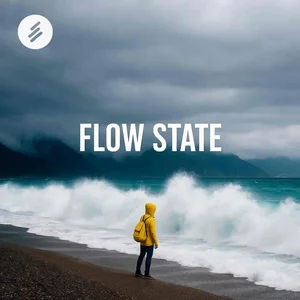
We found 2 Spotify playlists built around flow state playlist. Browse the picks and open your favorite on Spotify.
Quick comparison
| # | Playlist | Followers | Status | Spotify |
|---|---|---|---|---|
| 1 | Flow State — Productivity and Work Music | 15 | Available | Open |
| 2 | Flow State 🧘 Focus Productivity Mix | 13 | Available | Open |
Playlist picks
Compare the current playlist options, then open the guide or Spotify link for the one that fits best.
Flow State Productivity
A public Spotify playlist aligned with flow state productivity.
Flow State Focus
A public Spotify playlist aligned with flow state focus.
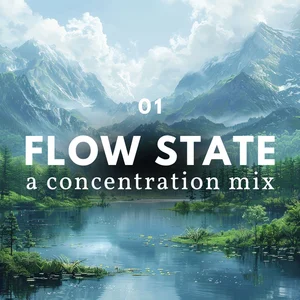
Start here: what a flow state playlist should do
A strong flow state playlist is not magic; it is an environment-setting tool. The goal is to reduce friction at the start of a work block and keep the audio from becoming the main event.
This 2026 roundup compares 2 Spotify playlist options for listeners who want music for deep work, studying, coding, writing, design, planning, or other long-focus sessions. The best fit is usually the playlist that feels steady, low-distraction, and easy to leave on rather than the one that sounds most exciting in the first 30 seconds.
Flow research often points to conditions like a challenge that matches your skill level, clear goals, and useful feedback; newer work also cautions that flow is not caused by one factor alone (Nature / Communications Psychology). (pmc.ncbi.nlm.nih.gov) Music can support the setting, but the task still needs structure.
The sound profile that usually works best
For flow state listening, prioritize music that creates momentum without pulling attention away from the task.
Look for:
- Mostly instrumental tracks or vocals used as texture rather than language.
- Consistent energy with few sudden drops, loud transitions, or attention-grabbing hooks.
- Moderate tempo feel: enough pulse to keep you moving, not so much that it feels like workout music.
- Low novelty after the first few tracks; surprise is fun, but too much surprise can break concentration.
- A long usable runtime so you are not choosing new music every 15 minutes.
This matters because the effects of background music depend on the task, the listener, and the music itself. A sustained-attention study found that preferred background music increased task-focused states by reducing mind-wandering, while other research suggests lyrics can interfere with verbal or memory-heavy work (Psychological Research, Journal of Cognition / PMC). (link.springer.com)
Match the playlist to the work, not just the mood
Different tasks need different levels of stimulation. A playlist that works for spreadsheet cleanup may be too busy for writing; a very calm ambient mix may be perfect for reading but too sleepy for production work.
Use this simple matching rule:
- Writing, editing, reading, studying: choose quieter, lyric-light, less rhythmically busy music.
- Coding, design, admin, data cleanup: choose a steady beat or soft electronic pulse if it helps you maintain pace.
- Creative ideation: try slightly warmer or more spacious music, but avoid tracks that make you stop and listen closely.
- Repetitive tasks: a more rhythmic playlist can help the work feel less flat.
A review of background music and cognitive performance found that music can affect performance differently depending on context, and workplace-focused research has also reported that music without lyrics is often preferable when attention is the priority (PubMed, Work journal article). (pubmed.ncbi.nlm.nih.gov)
How to test a flow state playlist in one work session
Do not judge a focus playlist by the first track. Test it over a real work block.
Try this 45-minute check:
- Set one clear task before you press play.
- Start the playlist at a low volume; it should sit behind the work, not compete with it.
- Do not skip tracks for the first 15 minutes unless something is obviously distracting.
- Notice your interruptions: did you check the playlist, adjust volume, or think about the music?
- After 45 minutes, keep or replace it based on whether it helped you stay with the task.
The best playlist is the one you can forget about. If you keep noticing vocals, dramatic builds, big bass changes, or tracks that feel emotionally demanding, save that playlist for another context.
Volume and repetition matter more than people think
Even a well-chosen playlist can become distracting if it is too loud. For deep work, set the volume low enough that the music masks background noise but does not obscure your inner reading voice.
Repetition can also be useful. Familiar music often requires less active processing than brand-new music, which is one reason many people return to the same focus mixes during work. The tradeoff is boredom: if the playlist starts to feel stale, rotate it rather than forcing it.
A practical rule: if the music makes you want to browse, sing along, identify the track, or change what you are doing, it is no longer serving flow.
What this guide is—and is not—claiming
A flow state playlist can help create a consistent cue for focused work, but it cannot guarantee flow, productivity, creativity, or better grades. Research on background music is mixed because tasks vary: music that helps one person stay engaged can distract another person on a language-heavy task.
Use the playlists in this guide as candidates, then evaluate them against your own work. The right choice should make starting easier, reduce background noise, and keep your attention pointed toward the task—not toward the playlist.
Common questions
What makes a good flow state playlist?
A good flow state playlist is steady, low-distraction, and easy to keep on for a full work session. Instrumental music, soft electronic textures, ambient tracks, lo-fi beats, and restrained cinematic music can all work if they do not pull attention away from the task.
Can music actually put you into a flow state?
Music can support the conditions for focus, but it does not create flow by itself. Flow also depends on the task: it should be clear, challenging enough to stay engaging, and not so difficult that it becomes frustrating.
Is instrumental music better for flow state work?
For reading, writing, studying, and other language-heavy work, instrumental or lyric-light music is usually the safer choice. Lyrics can compete with verbal processing, while instrumental music is less likely to interrupt your inner monologue.
Should I use the same flow state playlist every day?
Using the same playlist can help turn music into a work cue, especially if it fades into the background. If it starts to feel stale or distracting, rotate between a few similar playlists rather than switching to a completely different mood every session.
What are the best flow state playlists on Reddit?
Reddit can be useful for discovering how people describe their focus-music preferences, but treat it as a starting point rather than a ranking system. Search for threads about flow state music, deep work playlists, study music, coding music, or instrumental focus playlists, then test any recommendation during a real work block.
Related searches
- flow state playlist
- best flow state playlist
- flow state playlist spotify
- flow state playlist 2026
- flow state playlists