Original playlist analysis by PlaylistScaler
These playlists split “underground” into goth, chill hip-hop, and Berlin-focused techno. The notes distinguish each curator’s stated theme using the available track examples.
Best for
- Most followedGoth Underground 50,422 followers
- Fastest growingChill Underground Rap 2026 +47 followers a day
- Most tracksBerlin Electronic Underground 256 tracks
Find your starting point
- New underground gothGoth Underground
- Chill rap with recurring Lee SinChill Underground Rap 2026
- Berlin-focused technoBerlin Electronic Underground
Playlist picks
Each playlist is credited to its Spotify curator.
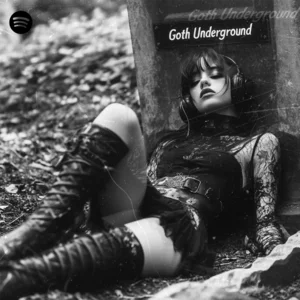
Darkword frames this as a feed for new underground goth, with Cruc1fy appearing twice in the examples alongside Secret Cameras and Kalte Steine. Choose it for a goth-specific interpretation of the theme rather than a broad underground survey.
- Followers
- 50,422
- Tracks
- 99
- Followers per day
- +24
- Monthly listeners (est.)
- 1,900–5,700
- Most listeners in
- Mexico City, MX
Newest track added Oct 9, 2026 · figures via artist.tools.
L S centers the playlist on chill underground hip-hop. The examples place several Lee Sin tracks beside Nujabes with Cise Starr and MF DOOM with Mr. Fantastik, making this the clear rap choice.
- Followers
- 49,255
- Tracks
- 197
- Followers per day
- +47
- Monthly listeners (est.)
- 2,100–6,200
- Most listeners in
- London, GB
Newest track added Oct 9, 2026 · figures via artist.tools.
xIGNISx presents this as techno associated with Berlin, with examples from Miyagi, Boris Brejcha, and Dirty Doering. Pick it when electronic and techno curation is the priority rather than goth or hip-hop.
- Followers
- 40,595
- Tracks
- 256
- Followers per day
- +14
- Monthly listeners (est.)
- 1,500–4,500
Newest track added Oct 9, 2026 · figures via artist.tools.


How we compared these playlists
PlaylistScaler analyzes observed Spotify playlist contents. Audio measurements, where shown, come from Shazam through artist.tools. Follower growth, listener estimates and listener cities for the wider selection come from artist.tools. Playlists belong to their credited curators.
Sources, coverage & limitations
Automatic genre picks need a matching title or assigned topic, or supporting track genre labels. Editors can also select crossovers.
Observation dates appear with each playlist. Track examples are a small sample. Missing measurements are excluded, never counted as zero. Audio medians require measurements for at least ten distinct tracks and 80% of the playlist’s distinct tracks. The middle half is the range from the 25th to the 75th percentile.
Energy, danceability and other audio scores describe the recordings on a 0–1 scale; they do not measure listener outcomes or musical quality. Acousticness does not establish the absence of vocals. Explicit flags are metadata, and unmarked tracks are not a guarantee of suitability.
Track overlap uses shared distinct tracks divided by the combined distinct tracks. Repeated entries are counted separately from unique tracks. Genre labels can overlap: one track may have several labels. Follower counts and changes describe audience size, not listening activity or musical quality. Results apply to the playlists compared here, not all of Spotify.
Measurement coverage for each playlist is listed in its "Sources & full analysis" panel. "Best for" picks compare only playlists that have the measurement. Most-added songs count each song once per playlist, across the playlists whose track lists could be read.
AI assists with descriptions grounded in these observations. Supporting evidence changes can retire that commentary until it is refreshed. About the methodology · Suggest a correction.